Monday, August 31, 2009

Pretties by Scott Westerfeld (4 stars)


The second in the Uglies trilogy. Although not as good as uglies or specials, I still enjoyed this book. It explores some interesting ideas, and demonstrates the motivation for the system of mind control with the violence of the pointlessly warring hunters camp. The ethical waters are muddied so that the reader can see some positives to the actions of the wardens and 'Special Circumstances'.

I was surprised by the alcohol abuse - in the opening pages Tally sucks down Bloody Marys at breakfast to cover a hangover, and the self-mutilation - the cutters making themselves 'bubbly' with knives. Fairly dangerous territory for a young adult book.

Still a good read, but it was mainly about getting the plot ready for the next book.

4 stars.

Friday, August 28, 2009

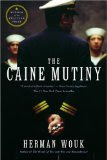
The Caine Mutiny by Herman Wouk (4 stars)


The Caine Mutiny was published in 1951, and was a massive success, feeding a public hungry for stories of the recent war. It won the Pulitzer Prize in 52, was made into a broadway stage production, and a movie with Bogie playing Queeg. It is referenced all over the place, including Red Dwarf, Star Trek, and Michael Caine's name?!

Of course, I didn't know any of that (except the prize-winning) when I started reading. I really enjoyed the book, and was amazed Wouk could take me through Navy officer school, and so much ordinary Navy life on board the Caine without being boring. Wouk paints what feels like a very true picture of the Navy at the time, through his own experience. The war-time Navy life described would have been similar to that experienced by many sailors, Willie sums it up best:
It's a broken-down obsolete ship. It steamed through four years of war. It has no unit citation and it achieved nothing spectacular. It was supposed to be a minesweeper, but in the whole war it swept six mines. It did every kind of menial fleet duty, mostly several hundred thousand miles of dull escorting...But we will remember the Caine, the old ship in which we helped to win the war. Caine duty is the kind of duty that counts. The high-powered stuff just sets the date and place of the victory won by the Caine.

There are some interesting characters in the book. Captain Queeg is brilliant in his spectacular stupidity, arrogance, cowardice and paranoia. Keefer is supposed to represent the intellectuals forced into military service, his attitude is summed up with his speech:
The Navy is a master plan designed by geniuses for execution by idiots. If you're not an idiot, but find yourself in the Navy, you can only operate well by pretending to be one...

Life on the Caine is probably representative of the average experience in the Navy during WWII: it is mostly a daily drudgery of shifts, tedious drills, and manufactured melodrama over the smallest of incidents, interspersed with with just a few moments of complete terror in battle. Willie exposes a "glad it's not me" attitude to battle that seems to be shared universally amongst those on the Caine:
Willie had a vague shameful sense that he was storing up anecdotes for future parlor chats while other men were perishing, and that such behavior showed a want of feeling...It occurred to him that there was an unsettling contrast between himself, eating ice cream, and marines on Namur a few thousand yards away, being blown up. he was not sufficiently unsettled to stop eating the ice cream, but the thought worked around like grit in his mind.

It is an interesting, well-written story, of which the mutiny actually plays a surprisingly small part. The court martial is Queeg at his best, and is the high point of the book. I'm not sure I would recommend this book, but I enjoyed it enough to give it:

4 stars.

Saturday, August 15, 2009

Breaking Dawn by Stephenie Meyer (3.5 stars)


Last in the twilight series. I approached this one with trepidation because I had heard it was the worst in the series, and I'd already dealt out some nasty reviews. There are plenty of annoying things about this book (big spoilers ahead):

  • Bella is supposedly in love with Edward but plays a ungrateful spoilt little kid at the wedding, which she doesn't want, and acts like it is just another party Alice wants to organise for her.
  • Bella and Edward finally get jiggy, after marriage of course, and Meyer manages to write a suitably Mormon sex scene. Of course the very first time Bella has sex she gets pregnant.
  • Bella names her freak baby 'Renesmee Carlie' (a combination of the Grandparents' names), which is the most pathetic, ridiculous name I have ever heard of.
  • Jacob is reduced to being a glorified guard dog for most of the book.
  • Bella finally gets her vamp on, and is completely disappointing as a newborn - where's the ferocious thirst and ensuing bloodbath?
  • The baby is perfect, doesn't cry, has super powers, and practically looks after itself. C'mon, we could of at least had a bit of uncontrollable baby vamp!
  • The Cullens amass an army that starts to be more X-men than anything else (now we're talking), with all sorts of different super-powers in the mix. There is an awesome setup for a huge battle with the Volturi which comes to.....nothing. No one important dies and they live happily ever after thanks to Bella's care-bear force field. Yay.

Having said all that I was entertained. Despite the book being 754 pages long, there was so much less stuffing around than in the other books. The wedding and honeymoon happen fairly quickly and were much less agonisingly drawn out and overblown than I was expecting. The book read like a fairly mindless action novel, and was fun to read, even if it threw away all the most interesting plot opportunities in favour of happy endings.

3.5 stars

Tuesday, August 11, 2009

The Time Traveler's Wife by Audrey Niffenegger (5 stars)


I think this will be in my top ten books of all time.

The idea of involuntary time travel by the main character Henry in this novel is simple, and brilliantly executed. Not much time is spent dwelling on the mechanics or fake science of why/how this is possible, the real focus is the love story between Henry and Clare, and their struggle to have a semi-normal life together.

The plot follows Clare's (normal) chronology, which succeeds brilliantly at binding together all of Henry's jumping around in time. The voices of Henry and Clare are very similar - I often found myself checking back to the start of the paragraph to see whose thoughts I was reading. Some reviewers have criticised this as a character development flaw, but I don't agree, I think the characters are well developed and individual even if their voices sound similar. One sentence jarred for me, I simply could not believe that Clare would think this:
My breasts hurt. My c**t hurts. Everything hurts.

I'm not denying childbirth hurts, but I just can't believe that Clare would use the 'c-word' in her own thoughts.

I didn't really buy Henry's supposed 'bad-ass' persona before he met Clare, and I wasn't 100% convinced by the 'intelligentsia' Rilke-quoting name-dropping acts from Henry and Gomez either.

Having said all that, they are literally the only criticisms I can think of. The story is beautiful and incredibly emotional, don't read the ending on the bus!

5 stars!

Saturday, August 1, 2009

Eclipse by Stephenie Meyer (3.5 stars)


Book number 3 in the Twilight series, I give this one some credit, and I certainly enjoyed it more than the previous two. However, there are still lots of spew-worthy moments:
It was a face any male model in the world would trade his soul for. Of course, that might be exactly the asking price: one soul.

The plot direction is super obvious - someone is creating new vampires, oh really, who could that be? And Edward's ridiculous over-confidence makes it obvious the real battle is going to be wherever they think Bella is 'safe'.

The literary comparisons are overdone again (this time it is Wuthering Heights), but not as terribly as in New Moon. I'm also pretty sick of the whole love triangle thing - can't we have some more battles with the Volturi or something?

Meyer introduced the creepy 'imprinting' thing for the Werewolves. I wonder if this is going to be a convenient plot escape for Jacob in the next book? Is he also going to fall in love with a two-year old (like his pack-mate), and give up on Bella?

I just read some of the Twilight forums (wow, people, really), and checked out the merch store (Bella's bracelet anyone?). I'm surprised they have mens T-shirts, is there anything more emasculating than a Twilight T-shirt?

Those who haven't seen it should check out the XKCD comic (NSFW language).

3.5 stars.

Wednesday, July 29, 2009

In Defence of Food by Michael Pollan (4.5 stars)


I think this is the best food-related book I have ever read. The advice is distilled by the author into:
Eat food. Not too much. Mostly plants.

Pollan writes very well, and the book is the perfect length to be informative but not boring. He explains the rise of nutritionism - treating food as the sum of its currently known parts, the dangers of this approach, and how it has changed the western diet:
Milk through this lens is reduced to a suspension of protein, lactose, fats, and calcium in water, when it is entirely possible that the benefits, or for that matter the hazards, of drinking milk owe to entirely other factors (growth hormones?) or relationships between factors (fat-soluble vitamins and saturated fat?) that have been overlooked...The entire history of baby formula has been the history of one overlooked nutrient after another: Liebig missed the vitamins and amino acids, and his successors missed the omega-3s...

The 'Lipid Hypothesis' is one of the great failings of nutritional science, and has fundamentally changed the food landscape. Is there anything in the supermarket these days that isn't low fat? How bout this bombshell:
The amount of saturated fat in the diet may have little if any bearing on the risk of heart disease, and evidence that increasing polyunsaturated fats in the diet will reduce the risk is slim to nil.

I was fascinated by this book, and the advice rings true. To summarise:

  • Avoid foods that: include ingredients with unfamiliar/unpronounceable names, have more than five ingredients, or contain high fructose corn syrup. From our experience in the US it is extremely difficult to avoid the evil corn syrup in American supermarkets, it is in pretty much everything. Pollan uses the example of Sara Lee 'bread' as something to avoid - we called it 'cake bread'.
  • If your great-grandmother wouldn't recognise it as food, don't eat it.
  • Avoid food products that make health claims. The FDA in the US allows 'qualified' health claims on packaging, read 'lies'.
  • Eat mostly plants, especially leaves. Leaves are better than seeds because seeds are high energy storage mechanisms.
  • You are what you eat eats too. Chicken, pigs and cows all grow quicker when fed grains, but are healthier when eating grass. Roo is good for you because it is wild, and hence eats a diverse diet of plants. Wild plants have to defend themselves without pesticides, so have higher quantities of antioxidants and other goodies than farmed plants.
  • Eat like an omnivore. The more diverse your diet is, the better chance you have of covering all the nutritional bases.

There is plenty more advice, this is just some of it. I don't have the knowledge to critique it for scientific accuracy, but I don't think anyone will be harmed by following this advice.

I'm also going to read the "The Omnivore's Dilemma".

4.5 stars.

Saturday, July 25, 2009

The Known World by Edward P. Jones (3 stars)

The subject of this book is intriguing - it largely focuses on the story of slave-owning free blacks in Virginia in the 1850s. The idea of free blacks owning slaves had never even occurred to me before picking up this book. Jones explores the complicated relationships between whites, free blacks, slaves, politics and the law in a way that eroded the simplistic view I had of slavery in America at that time, and won him the Pulitzer.

The issues are complex, and I still find myself ill-equipped to answer the question 'Why would free blacks own slaves?'. Part of the answer is they were buying freedom for their families. A talented slave who was permitted to make money might eventually buy his/her freedom with money earned from making furniture, boots etc. and go on saving to buy freedom for his/her family. Once their family was secure, free blacks were looking to expand their wealth and secure their future by buying land and farming. Slavery dominated the labour market, and I imagine it was difficult to find labourers that could be paid a wage, so free blacks would buy slaves to work the land.

Jones painfully demonstrates that a free slave's hold on freedom is very tenuous - there was much money to be made in kidnapping free slaves and selling them back into slavery. With the only proof of freedom being 'free-papers' carried by the slave, these could easily be destroyed and there were plenty of unscrupulous buyers available.

Although the subject matter was interesting, the writing good, and Jones deals with the subject matter thoughtfully, I didn't enjoy this book very much. The writing constantly jumps around in time, from weeks to decades, often in the same paragraph and there are a huge number of characters, which are difficult to keep track of. The book finally seemed to be building to a climax in the final pages, but the narrative style kept me strangely disconnected from the events so I didn't have a burning desire to read on.

3 stars.