Sunday, May 16, 2010

Graceling by Kristin Cashore (3 stars)

I'm a sucker for superpowers books, and the 'graces' in this novel got me interested.  I initially loved Katsa's power, and her internal conflict over her actions as King Randa's pawn.  Unfortunately she turns out to be a Mary Sue: not only is she the best fighter in the world, she is also the best hunter and survivalist, doesn't get hungry, doesn't feel pain, doesn't need sleep, cannot get lost, and is the inspirational leader of an underground government fighting for justice.

I also found her relationship with Po fairly annoying.  She takes ages to realise Po (who is a Gary Stu with his own set of amazing powers) couldn't be more perfect for her, and when she does she gets really...angry?  What the?  This passage where she wakes up in a rage for no reason is just bizarre:
Katsa didn't know what was wrong with her when she woke the next morning.  She couldn't explain the fury she felt toward him.  There was no explanation; and perhaps he knew that, because he asked for none.
There is also a very strong anti-marriage message from Katsa, which seems misplaced.  I get it, she is a strong willed, independent woman.  So why should that change if she gets married?  Maybe Cashore was just trying to make a point about women's rights in medieval times.

The climax comes and goes within a page.  It seemed weird that Cashore created a bad guy with such a cool power, then killed him so quickly.  I would have liked to have seen a war campaign waged between The Council and Leck.

I still enjoyed the book, and the battle with Leck in the forest was great.  Not bad for a first novel.

3 stars.

Thursday, May 13, 2010

The Lost Symbol by Dan Brown (1 star)

Da Vinci Code: entertaining, Angels and Demons: meh..OK, The Lost Symbol: sucks.

This book is horrible: formulaic Dan Brown, with a really boring and obvious ending.  It annoyed me in so many ways it is hard to know where to start.

Katherine is supposedly a genius whose work in the field of Noetics is going to change the 'entire world forever'.  But somehow she fails to be suspicious of a doctor who has supposedly been treating her brother (despite Peter never mentioning it), who invites her to his creepy house, wears a creepy amount of makeup, and manages to invite himself into her super-secret laboratory.  As an aside the field of 'Noetics' in the real world, sounds like downtown quacksville.

The other characters are cliches stolen from weird places - Sato is totally 'Edna' the crazy designer from the Incredibles, and does Mal'akh the giant tatooed fanatic sound a little like Red Dragon to anyone else?  Or perhaps the crazy albino, but with tattoos?

Brown seems to have hired a technology consultant for the 'hacking' section since he mentions traceroute and whois, but screws it up with sentences like:
Trish, this IP has a funky format.  It's written in a protocol that isn't even publicly available yet.  It's probably gov intel or military.
I'm running a diagnostic, and this firewall coding looks...pretty serious.

An IP address written in a protocol no-one else uses isn't going to be that useful now is it?  In fact it won't even be an Internet Protocol (IP) address unless it conforms to the Internet Protocol.  A serious firewall is just a whole lot of closed ports, and there is no 'coding' exposed to the outside.  But no-one gets hacking right, and I digress.

The 'national security' issue that looms over most of the novel is pissweak.  Oh no, some important people will be embarrassed in a video.  Who cares.  I thought Mr. Red Dragon had bought a nuke or something.  And why is the CIA the ones running all over DC chasing this guy, shouldn't it be the FBI?  Or weren't they sexy enough?

Brown uses a really annoying, lazy phrase to describe a memory flashback:
...Mal'akh flashed on the only other woman he had ever killed.
As Langdon tried to process what Katherine had said, he flashed unexpectedly on the gnostic Gospel of Mary...
'flashed on'???  What the?

The ending couldn't have been more obvious.  If you haven't picked where the ancient mysteries are located within the first 20 pages, you need to turn up your 'really obvious plot point' detector.  Also, worst treasure ever.  Seriously.  Why the hell would you go to all that trouble to hide something so boring and commonplace?

The dénouement is the worst part of the whole book - pages of cobbled together references pointed in the vague direction of a hand-wavy philosophy conclusion.  And it sounds like this:
...the Bible and the Ancient Mysteries are total opposites.  The mysteries are all about the god within you...man as god.  The Bible is all about the God above you...and man as a powerless sinner.
Blah blah blah.  Right at the end Brown builds us up for another big reveal that is...a sunrise.  Yay.

Did you notice there were exactly 33 points made in this review?  Not really, but if you believed that you will probably enjoy this book.

1 star.

Tuesday, May 4, 2010

My War: Killing Time in Iraq by Colby Buzzell (2.5 stars)


The initial impression the author gave me was that he is a loser, a stereotypical no-hoper who hasn't ever worked hard in his life and had to cheat on the drug test to get into the army. As I read, my estimation of him improved, he is actually quite intelligent, well-read, and not a bad writer.

The book is a product of Colby's blog, which he started while deployed in Iraq (despite thinking blogging was 'nerdy'). It became incredibly famous as a no-holds-barred unofficial account of the war from someone who was living it.

Unfortunately as a book, it still feels very bloggy. It is a mostly factual account of 'we went here, this happened', and except for the early part of the book, has little reflection from Colby.

It was interesting reading this after the Accidental Guerrilla, because I read first hand about how ineffective the US was in Iraq. I was amazed to read about soldiers playing Playstations on their big screen TVs (bought from the PX) in air-conditioned shipping containers on the Forward Operating Base (FOB), then rolling out in armoured Strykers for search-and-destroy missions. They were completely ineffective at stopping insurgents from mortaring the base every single day:
we didn't catch a single one of those mortarmen in the act of mortaring our FOB the entire time we were there.

2.5 stars.

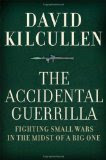
The Accidental Guerrilla: fighting small wars in the midst of a big one by David Kilcullen (2 stars)


I saw (on TV) Kilcullen give a fascinating address at the press club in August 2009, which prompted me to read his book. It was a pretty tough read. In Kilcullen's own words:
This book, like its wars, is a hybrid...perhaps too academic to be popular and too populist to be purely academic.

It definitely errs on the textbook side of things, with very dense text. Having said that, Kilcullen presents a interesting analysis of a number of insurgency-based conflicts, with a focus on Afganistan and Iraq. He analyses the tactics that have been used, their problems, and details why the (mis-named) 'surge' in Iraq was effective due to a switch to a counterinsurgency approach. Kilcullen, an Australian, rose spectacularly to fame to become Petraeus' most senior counterinsurgency advisor in Iraq.

Kilcullen agrees with the Chinese PLA authors of Chao Xian Zhan (Unrestricted Warfare), in that:
Western countries, particularly the United States, had created a trap for themselves by their very dominance of conventional warfare. Confronting the United States in direct conventional combat would indeed be folly, but rather than eschewing conflict, other countries or even nonstate actors could defeat the superpower through ignoring the Western-defined rules of "conventional" war, instead applying what the authors called the "principle of addition": combining direct combat with electronic, diplomatic, cyber, terrorist, proxy, economic, political, and propaganda tools to overload, deceive, and exhaust the US "system of systems."

and
strong countries would not use "unrestricted warfare" against weak countries becuase "strong countries make the rules while rising ones break them and exploit loopholes...[The United States] has to observe its own rules of the whole world will not trust it."

Can the US change how it wages war? Maybe not:
...And because capabilities for irregular or unconventional conflict are much cheaper to acquire than those for conventional conflict...they are paradoxically less likely to be developed...a substantial portion of the American economy, and numerous jobs in almost every congressional district, are linked to the production of conventional war-fighting capacity.

Kilcullen chooses the term takfiri to refer to Islamic terrorists:
The doctrine of takfir disobeys the Qur'anic injunction against compulsion in religion (Surah al-Baqarah: 256) and instead holds that Muslims whose beliefs differ from the takfiri's are infidels who must be killed. Takfirism is a heresy within Islam: it was outlawed in the 2005 Amman Message, an initiative of King Abdullah II of Jordan, which brought together more than 500 'ulema (Islamic scholars) and Muslim political leaders...in an unprecedented consensus agreement...Al Qa'ida is takfiri, and its members are universally so described by other Muslims.

Kilcullen presents four models to represent the current threat environment, which are neither exhaustive or mutually exclusive. They are the 'Globalization Backlash' thesis, the 'Globalized Insurgency' model, the 'Islamic Civil War' theory, and the 'Asymmetric Warfare' model. I won't address them all, but here is a quote on the Islamic Civil War theory:
...the Islamic civil war thesis suggests that the primary threat of takfirism is against stability in the Arab world and the broader Muslim community worldwide, and only secondarily against Western governments and populations. By intervening directly against AQ, this theory suggests, we have not only waded into someone else's domestic dispute but have also treated AQ as a peer competitor worthy of our top priority and full attention, thus immensly increasing AQ's credibility and clout in its struggle for ascendancy over the ummah.

On asymmetric warfare:
the 9/11 Commission estimate that the 9/11 attacks cost AQ between $400,000 and $500,000, plus the cost of training the 19 hijackers in the United States prior to the attack. This would make the 9/11 attacks the most expensive terrorist attack in history. But when one considers that the attacks inflicted a direct cost of $27.2 billion on the United States, and that subsequent operations in the "War on Terrorism" have cost about $700 billion to mid-2008, it is clear that the cost of the attack to America has vastly outweighed its costs to AQ...

the United States has so far spent $1.4 million per dollar of AQ investment in the attacks on the response.

The coalition screwed up in Afganistan by being out-governed by the Taliban at the local level. While the 'international community is training Supreme Court judges and seeking to build an Afgan legal system based on the post-2001 constitution', the Taliban is providing practical dispute resolution and legal services throughout southern Afghanistan, a 'shadow judiciary that expanded Taliban influence by settling disagreements, hearing civil and criminal matters' etc.

Counterinsurgency is all about providing security for the population in their local area, ie. it is population-centric rather than enemy-centric (where enemies are hunted down and killed in sweeping manoeuvres):
the more organized, locally present, and better armed a group is, the more likely it is to be able to enforce a consistent system of rules and sanctions, giving the population the order and predictability it craves...

The idea is to maintain a persistent presence to draw the enemy out of hiding into attacking your defences. This was proven to be much more effective in Iraq during the surge than the previous enemy-centric strategy of search-and-destroy sweeps that killed many civilians and provoked a public backlash.

On page 121 Kilcullen provides a brilliant description of the 'dialogue of the deaf', which perfectly characterised the disconnect between Americans trying to reduce incident numbers as a measure for success for congress, and the Iraqis trying to protect the population.

There is so much quotable in this book I could go on forever, but this is already too long. Needless to say, I found the book very interesting, although I often found myself saying 'well, Duh', because some of the observations and strategies seemed to be common sense. In any case, I'm so glad someone with that common sense is now advising the American military.

A few to end with.
I have shown how most of the adversaries Western powers have been fighting since 9/11 are in fact accidental guerrillas: people who fight us not because they hate the West and seek our overthrow but because we have invaded their space to deal with a small extremist element that has manipulated and exploited local grievances to gain power in their societies.

In terms of strategy, the Iraq example indicates that for us to invade foreign countries with large-scale unilateral military intervention forces simply plays into the AQ exhaustion strategy already described, creates space for the infection of societies by extremism, and prompts contagion to the wider world. (As successive intelligence estimates have shown of Iraq, the conflict has exacerbated extremism worldwide, and as noted actual violence has spilled over into neighboring countries, and further afield, as has radicalization.)

This explains a lot:
Why did most countries (including those who opposed the Iraq war) believe in 2002 that Saddam Hussein's regime had WMDs? Because they were intercepting the regime's communications, and many senior Iraqi regime members believed Iraq had them.

Despite learning a lot from this book I can't give it a high score because it is such a hard read - it is extremely wordy, dense, and has a fair bit of repetition.

2 stars.

Thursday, April 22, 2010

The Five Greatest Warriors by Matthew Reilly (1 star)


The Five Greatest Warriors is the even-more-silly sequel to The Six Sacred Stones that ended on a cliffhanger with Jack West Jr falling into an abyss. Despite the clumsy over-the-top cliffhanger, I certainly wasn't rushing out to buy this book, but thought I'd read it to finish off the story. So let the criticism begin (some spoilers ahead).

When Jack and Zoe are watching Pooh Bear's pulse as he breaks into the Israeli prison, isn't it convenient that they are waiting for it to take a sudden dive and the attackers oblige by drugging Pooh Bear? What if they had just decided to beat the shit out of him instead? Lame.

Reilly uses the 'traitor' plot twist far too often, by the end of the book most of Jack's team have turned out to be working for somebody else.

Counting JC as one of the 'Five Greatest Warriors' was ridiculous, and only done so that Reilly could make finding Jesus' tomb one of the tasks to be performed in the quest. Here is the shitty justification:
'Jesus Christ is not commonly called a warrior. He was a man of peace.'
'He carried a sword', Wizard countered, 'and at one famous point in the Gospel of Luke, he urged his followers to go and buy swords.'
'And many of those followers were revolutionaries urging insurrection against Rome,' Julius said.

Weak.

The descriptions of how the rest of the world is getting through the chaos of the dark star appearing are so tokenistic - a couple of paragraphs strewn here and there in-between action:
At the same time, the National Weather Service reported unusual weather patterns all over the world: fierce flooding in Brazil; sandstorms in China; cyclones in the Pacific; even a weeklong rainstorm in the Sahara Desert.

Meteorologists were confounded.
It was as if the world had gone mad.

Wow, what a shitty description of what is supposed to be the end of the frickin world.

At the third vertex there is a lava trap. Come on!
As soon as Jack set foot on the first step of the second tower, lava began oozing out the top of the third one, so that now three separate rivers of lava were pouring down from the peaks of the first three towers, all at different stages in their descents.

So what if someone had triggered this trap sometime in the previous few thousand years? The lava would have cooled, formed rock, and the intricate channel system would be blocked and never work again. What if the lava was a different temperature than the designers expected and didn't flow at all? Of course this is all assuming that building a giant intricate tower city inside a fricking volcano is a good idea. Nevermind the practicalities of how you actually build something that big inside a volcano in the first place, what are the chances the volcano won't erupt or damage the system in any way over the next few thousand years?

Continuing the completely implausible vertex locations, Reilly picks Diego Garcia, a coral atoll with maximum elevation of 6.7m as the perfect spot for yet another giant underground space. We're told that the entrance:
...resembled an open-cut mine, at least seven storeys deep...

I'd like to see someone try to dig a hole like that into a coral atoll; it would be a good way to make a big seawater swimming pool.

Of course the biggest problem is why the designers of the machine made it so ridiculously hard to turn on. And more to the point - if they knew exactly when disaster was going to occur, why not make it turn on automatically? If you went to all the trouble of making a machine to save the world would you really hide the keys to it all over the planet and booby trap their locations such that it is pretty much impossible for anyone to gather them? Sigh.

Given that Reilly wants to go even bigger with his next novel:
I'll have to make sure that it's a huge story idea. To my mind, any new Jack West Jr novel will have to be bigger and bolder than the three I've already written. And if I do decide to write it, I will do so with a plan to creating a story that will count down all the way to a seventh and final novel (The One Something Something).

I think my Reilly journey has ended.

1 star.

Friday, April 16, 2010

My Sister's Keeper by Jodi Picoult (3 stars)


Jodi Picoult loves to twist the knife. Your daughter Kate is dying of an aggressive form of cancer. Your other daughter Anna is a donor being harvested for spare parts, and she doesn't want to do it anymore so she is suing you. Your son is an arsonist, which is even more complicated because your husband is the Captain of the fire brigade. Kate stays alive long enough to meet her soul-mate, who then dies suddenly (also of cancer) without a chance for her to say goodbye.

Could it be any more tragic? It's like Picoult tries to think up the most horrendous family situation she can, then writes about it with the goal of making you cry as much as possible.

I also found some of the characters fairly unbelievable. I doubt a teenage Jesse lighting fires for attention would have been smart enough to create chemical accelerants and hide his tracks so effectively. Anna was also unrealistically mature for 13, and able to hold up witty repartee with adults that would be far beyond any real 13-year old. Anna is able to pick that Campbell is lying about why he has his dog:
"You're lying."
Anna croses her arms. "Well, you lied first. You hear perfectly fine."
"And you're a brat." I start to laugh. "You remind me of me."
"Is that supposed to be a good thing?" Anna says, but she's smiling.

And argues like a debating champion or a politician:
"It doesn't work that way," I say. "You started this lawsuit. You wanted to be someone other than the person your family's made you for the past thirteen years. And that means you have to pull back the curtain and show us who she is."
"Half the grown-ups on this planet have no idea who they are, but they get to make decisions for themselves every day," Anna argues

Having said all that, even though it is incredibly sad, I enjoyed most of this book.

Until the ending.

The ending is horrible, and compromises the entire book. Picoult spends 400 pages discussing an incredibly tough moral and ethical dilemma and then throws it away with a trite 'happily ever after' ending where everything works out way too conveniently and Anna doesn't have to make a choice.

I wanted to see what choice Anna was going to make! Would it be possible for her to look beyond the risk to herself and possible health complications in the future for the sake of her sister? How would she weigh a small chance of extra time with Kate against her own health? If she didn't donate the kidney how would she live with that decision for the rest of her life? Would she respect Kate's wishes if Kate asked her not to donate?

3 stars.

Sunday, April 4, 2010

Cross Stitch (aka Outlander) by Diana Gabaldon (1 star)


Time travel you say? I'm willing to give it a shot, even though the cover is a suspicious shade of pink with flowery writing...

It turns out the time-travel construct is an un-explained crutch to write a soft-porn novel for middle-aged women who have a thing for big Scottish red-heads in kilts. This 863-page novel is chock full of sex and disturbing sexual violence. It isn't long after Claire arrives in 18th century Scotland that Gabaldon invents a bizarre reason for her to marry Jamie so the sex can kick off:
...the only way I can legally refuse to give ye to Randall is to change ye from an Englishwoman into a Scot...Ye must marry a Scot. Young Jamie.

It annoyed me that Claire slotted perfectly into Scotland in 1743 after being transported from 1946. She effortlessly recalls dates, obscure names and customs from history lessons, and isn't surprised by anything she encounters. She doesn't complain about hygene, clothing, backward customs, women's rights (she takes a beating from her husband), or anything else you might expect to shock a modern woman thrust into life in the wilds of Scotland 200 years earlier. Also, the few people who do know she is from the future show only a mild interest in the future. What the hell? If I seriously believed someone was from the future I would be hammering them with questions.

I also got sick of reading passages like this:
'Aye, I mean to use ye hard, my Sassenach,' he whispered. 'I want to own you, to possess you, body and soul.' I struggled slightly and he pressed me down, hammering me, a solid, inexorable pounding that reached my womb with each stroke. 'I mean to make ye call me "Master", Sassenach'.

Why does Jamie continue to call Claire 'Sassenach'? It is pretty much like calling her 'English', which he continues to do after they are married and declare their love for each other. Weird.

I can't believe how many people on Amazon gave this 5 stars.

1 star.