Monday, October 5, 2009

The Remains of the Day by Kazuo Ishiguro (3.5 stars)


This book won the Booker in 89, and has been made into a movie starring Anthony Hopkins and Emma Thompson. It has a lot of critical acclaim and is beautifully written. I enjoyed reading it, although I always felt that the real story was just around the corner, and then it ended. Stevens' revelations about his life are quite depressing, as are his absurd allegiance to his employer such that he waits at table while his father dies upstairs. A deserving winner of the prize but I'm not going to pretend I loved it.

3.5 stars.

Friday, September 25, 2009

Peeps by Scott Westerfeld (4.5 stars)


Can Scott Westerfeld do wrong? Seems not so far. This was a fun read, I couldn't put it down. Lets start with the bad bits.

I hate Lace purely because she says dude all the frickin time. It is ridiculous. Was this some misguided attempt to appeal to teens? Did Westerfeld's editor tell him all the cool kids are saying it? Even people who do say dude a lot wouldn't say it how Lace does.

When I read this I wondered if the story was going to dissolve into some sort of stupid sci-fi Mills and Boon:
The parasite makes sure that I'm like the always-hungry snail, except hungry for sex. I'm constantly aroused, aware of every female in the room, every cell screaming for me to go out and shag someone!

Thankfully it didn't.

I found the alternating chapters of parasitology information slightly annoying because they broke the story up. It kind of felt like Westerfeld was showing off his research - look how much gross stuff I know - but it was pretty interesting so I didn't mind.

I liked the idea of vampirism being caused by a parasite, and the linking of all the major historical disease outbreaks was also pretty creative. This approach sets this book apart from the vast majority of vampire fiction.

I think I would have preferred to have left the evil in the sewers as a vague bad smell because the fight scene in the subway seemed a bit stupid. I think he would have been better stopping the story early and leaving the fight for the next book.

4.5 stars

Wednesday, September 23, 2009

The Afgan by Frederick Forsyth (2.5 stars)


Well, it's been a little while since I read a book like this - something you'd pick up in an airport to keep entertained on a flight.

It was the usual annoyingly perfect picture of the US intelligence and military machine - brilliantly efficient, elite trained forces, amazing weaponry etc. Where are the bored unmotivated workers, the hopelessly inefficient bureaucracy of the real world? It was certainly no Caine Mutiny.

One of the amazon reviewers had a funny list of inaccuracies that I'll reproduce here:

  • Malaysian Airlines _does_ serve alcohol.
  • The 9/11 attacks did not occur at breakfast time in London but in the mid afternoon.
  • There is no U.S. Army rank of "Senior Captain"
  • In the U.S. government a GS-15 is not a "junior staffer," but rather the highest ranked of the non-executive service, making more than$100,000/year.
  • The British SBS is the "Special Boat Service" not the "Special Boat Squadron."
  • The M21 sniper rifle was replaced by the M24 Sniper Weapon System in 1988.
  • It's somewhat unclear, but the story seems to imply that the hero learned passable Pashto from hanging out with Tajiks for six months. That's roughly like learning learning German by hanging out in France.
  • The hero is impersonating an Afghan ex-mujahedeen turned Taliban fighter. His teeth are inspected by very thorough Al-Qaeda security men, who somehow fail to notice his Western dental work.

2.5 stars.

Sunday, September 13, 2009

Year of Wonders by Geraldine Brooks (4 stars)


This was a really interesting read, based on the true story of the village of Eyam in England that quarantined a plague outbreak within the village in 1666. I had high expectations for this book after enjoying March, and it lived up to my expectations. My main criticism is the hurried ending. I thought Mompellion's story about why he married Elinor was ridiculous, which was then compounded by the bizarre flight to...Morocco? What the? If the ending had been more thoughtful I would have given it 4.5.

4 stars.

Thursday, September 3, 2009

Specials by Scott Westerfeld (4.5 stars)


This was a great end to the Uglies trilogy. I'm a sucker for some superpowers, and the Specials have got them by the bucketload. Self-healing, indestructible skeletons, 'skintenna' network interfaces, infra-red vision, super fast reflexes and enhanced hearing makes for some seriously surgically weaponised individuals.

Tally is playing for a new team, which is quite unsettling, and because of her 'icy' outlook the love story is quite subdued in this book. I liked the ending and thought it demonstrated the benefits and challenges posed by democracy and immigration (trying not to give too much away here). I didn't pick any of the twists in the book, which was great.

4.5 stars.

Monday, August 31, 2009

Pretties by Scott Westerfeld (4 stars)


The second in the Uglies trilogy. Although not as good as uglies or specials, I still enjoyed this book. It explores some interesting ideas, and demonstrates the motivation for the system of mind control with the violence of the pointlessly warring hunters camp. The ethical waters are muddied so that the reader can see some positives to the actions of the wardens and 'Special Circumstances'.

I was surprised by the alcohol abuse - in the opening pages Tally sucks down Bloody Marys at breakfast to cover a hangover, and the self-mutilation - the cutters making themselves 'bubbly' with knives. Fairly dangerous territory for a young adult book.

Still a good read, but it was mainly about getting the plot ready for the next book.

4 stars.

Friday, August 28, 2009

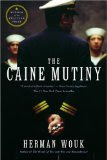
The Caine Mutiny by Herman Wouk (4 stars)


The Caine Mutiny was published in 1951, and was a massive success, feeding a public hungry for stories of the recent war. It won the Pulitzer Prize in 52, was made into a broadway stage production, and a movie with Bogie playing Queeg. It is referenced all over the place, including Red Dwarf, Star Trek, and Michael Caine's name?!

Of course, I didn't know any of that (except the prize-winning) when I started reading. I really enjoyed the book, and was amazed Wouk could take me through Navy officer school, and so much ordinary Navy life on board the Caine without being boring. Wouk paints what feels like a very true picture of the Navy at the time, through his own experience. The war-time Navy life described would have been similar to that experienced by many sailors, Willie sums it up best:
It's a broken-down obsolete ship. It steamed through four years of war. It has no unit citation and it achieved nothing spectacular. It was supposed to be a minesweeper, but in the whole war it swept six mines. It did every kind of menial fleet duty, mostly several hundred thousand miles of dull escorting...But we will remember the Caine, the old ship in which we helped to win the war. Caine duty is the kind of duty that counts. The high-powered stuff just sets the date and place of the victory won by the Caine.

There are some interesting characters in the book. Captain Queeg is brilliant in his spectacular stupidity, arrogance, cowardice and paranoia. Keefer is supposed to represent the intellectuals forced into military service, his attitude is summed up with his speech:
The Navy is a master plan designed by geniuses for execution by idiots. If you're not an idiot, but find yourself in the Navy, you can only operate well by pretending to be one...

Life on the Caine is probably representative of the average experience in the Navy during WWII: it is mostly a daily drudgery of shifts, tedious drills, and manufactured melodrama over the smallest of incidents, interspersed with with just a few moments of complete terror in battle. Willie exposes a "glad it's not me" attitude to battle that seems to be shared universally amongst those on the Caine:
Willie had a vague shameful sense that he was storing up anecdotes for future parlor chats while other men were perishing, and that such behavior showed a want of feeling...It occurred to him that there was an unsettling contrast between himself, eating ice cream, and marines on Namur a few thousand yards away, being blown up. he was not sufficiently unsettled to stop eating the ice cream, but the thought worked around like grit in his mind.

It is an interesting, well-written story, of which the mutiny actually plays a surprisingly small part. The court martial is Queeg at his best, and is the high point of the book. I'm not sure I would recommend this book, but I enjoyed it enough to give it:

4 stars.