Sunday, November 22, 2009

Under a Starless Sky, A Family's Escape From Iran by Banafsheh Serov (3 stars)


This is a first-hand account of a young girl's escape from Iran under Khomeini in the early 80s. The story focuses on Serov's and her family's experiences in Iran during the Islamic Revolution and later with people smugglers to get to Turkey. The book ends with the family's entry to Australia, and this great quote:
'Where do we go?' he asked. He pushed the passports at the immigration officer. Maybe the man had not noticed that they were Iranians. Maybe he had missed the exit stamp from Turkey declaring them as illegals and the refusal stamp from Hong Kong.

The officer took the passports, opened them again, checked the visa and handed them back with a smile.

'Anywhere you like, mate,' he said.

I'm going to give the Australian authorities in the 80s the benefit of the doubt and assume they actually did give them some support and help settling-in. More than a visa and a wave from Sydney airport customs anyway.

I think the saddest thing about this book is that this family could really only make their escape because they were very wealthy. Plenty of middle and lower class families in Iran would have suffered similar hardships during the revolution but lacked the contacts and the cash to turn the people-smuggling wheels.

The book is well-written. The focus is on Serov's experiences so don't expect a lot of historical information or background.

3 stars.

Tuesday, November 10, 2009

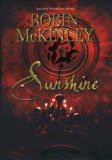
Sunshine by Robin McKinley (4 stars)


I started reading this book for a bizzare reason (thanks Lic), but I'm glad I did. It may well be the best use of c**t by a female character as claimed:
You want to talk cranky, coitus interruptus takes me well beyond cranky. My engorged labia felt like they were pressing on my brain - what there was of my brain - and if I didn't get to fuck someone, something now - a vampire would do - I was going to fucking explode. My cunt ached like a bruise.

Whoah.

That quote is actually a bit misleading - one of the things I liked the most about this book was that it wasn't a tragic teen love story between an impossibly beautiful vampire and a human (I'm looking at you, Meyer), and wasn't chock-full of sexual tension. The vampire Constantine is seen by Sunshine as a menacing, terrifying figure, an embodyment of evil and darkness. Sunshine has created a bond with him, but she isn't sure it was a good idea, and he isn't wild about it either.

I have two main complaints. The first is style. A large amount of the story is told in an internal monologue, with very little actual conversation and interaction between sunshine and other characters. Character development suffers, and I could have lived with that, but it also destroys the flow of the most exciting parts of the book. Here is a section from the climax, where Sunshine is in the middle of a battle, covered in blood, and decides it is a good time to embark on a long monologue about vampire fiction she read as a kid:
Blood stings when it gets in your eyes. And it's viscous, so it's hard to blink out again. It may not only be because the blood stings that you're weeping.

I have always been afraid of more things than I can remember at one time. Mom, when I was younger, and still admitted to some of them, said that it was the price of having a good imagination, and suggested I stop reading the Blood Lore series...

McKinley has a parentheses problem. Take a look at page 13 and 14 - there isn't a paragraph without a lengthy bit of text, or even a few full sentences inside parentheses.

My second main complaint is that McKinley barely explains anything properly and didn't write a sequel when there were so many interesting things I wanted to find out (beware tharr be spoilers ahead):

  • Who/what is Mel? Some kind of sorcerer? A vigilante? What do all his tatoos do? Why doesn't he care about what Sunshine is doing? She likes that he doesn't ask questions, I think it is weird.
  • Is her grandmother alive?
  • What the hell is a bad spot? How do you sense one? What does the special SOF car do that allows you to drive through one?
  • What happened in the Voodoo wars? Who was fighting? Just humans vs. vamps or all the 'Others'? What happened to all the other cities?
  • Is the goddess of pain evil? What is her deal? Why is she called that?
  • How are Bo and Con actually different? Why are they fighting? Sure Sunshine is fighting out of some self interest, but why doesn't she ask him about it?

Arrrrgggggh!

So many times Sunshine asks a question in her head, but is too gutless to voice it:
I wanted to know why: what would scar a vampire? Another vampire's try for your heart?...But I didn't ask

I wanted to know too! Ask for me goddammit!

McKinley has a massive whinge on her blog about people hounding her for a sequel. Well sorry for liking your book Ms. McKinley, and maybe you should explain things next time! McKinley has created an incredibly rich world of magic, part-bloods, vampires, wardskeepers, secret police, and so much more, yet she claims not to have any ideas for a sequel. Come on! I think the real story is that she got sick of talking and thinking about the book on the tour, and now can't face writing a sequel.

I loved the world McKinley created, if only there was more.

4 stars

Thursday, November 5, 2009

The Bride Stripped Bare by Anonymous (3.5 stars)


When I started reading this book, Em made some comments like "Are you going to read that on the bus?" and others that I can't remember that made me think I was picking up a Mills and Boon. Thankfully it wasn't nearly as trashy, and although there is a fair bit of sex, not as much as I was expecting given the hysterical things that have been written about this book.

The first thing that struck me, was the second person narrative. Nikki Gemmell (not so anonymous) says:
I was fascinated by that particular tense and wanted to give it a go. It's extremely difficult to sustain...Some people have said, of my unnamed bride, that it was like "reading her brain, being in her head-space," which was exactly the effect I was aiming for-hopefully without too much indulgence.

I actually found it very impersonal, and annoying. This is what it sounds like (stop saying 'you'!):
You'd almost invited her on the spot when she said she was so low. You wanted her to join you just for a couple of days, as a treat: it's her birthday in three days, June the first. But you knew...

Some have speculated that Gemmell's outing as Anonymous was all part of a sneaky marketing ploy. I'm sure the scandal didn't hurt book sales, but I believe her when she says:
I loved the idea of writing a book that dived under the surface of a woman's life, a seemingly contentedly married woman, and explored her secret world-with ruthless honesty...I'd fully intended putting my name to the book when I began it. But six months into the project the text just wasn't singing-I was censoring myself...I'm a wife and a mother of two young boys, not to mention the daughter of two gently bewildered people in their sixties. I didn't want people judging them...But when the idea of anonymity came to me, everything clicked. I was suddenly like a woman on a foreign beach who's confident she doesn't know a soul and parades her body loudly and joyously without worrying what anyone thinks of her.

Much has been made of the sex in this book, but it is way less racy than any edition of Cosmopolitan magazine in the last 15 years. It actually gets quite cosmo-like with a section that lists 'what you want' and 'what you do not want' that could be transplanted straight into cosmo under 'turn ons' and 'turn offs'.

Overall I thought it was a good read.

3.5 stars.

Thursday, October 29, 2009

Sacred Games by Vikram Chandra (1 star)


I'm giving up! Sorry Mr. Chandra, I've given you 227 pages, and that's all the time I have to waste. This book has been on my list ever since I read Shantaram, but I thought I'd better have a break from epic Indian novels before I started this one. It is definitely epic, at 900 fairly dense pages.

My main objection is that the plot is just not interesting enough. The main story that follows Sartaj and Ganesh Gaitonde has some good moments, but even these are overpowered by the vast array of boring side stories. These are often lengthy chapters, and while I was reading them I had to fight the urge to flip pages to get back to the main plot.

There is a lot of untranslated Hindi mixed in with the text, but I didn't mind that at all. I thought the writing was reasonably good, but not enough to appreciate it on its own in the absence of a decent story.

If Chandra had a competent editor and re-told the same story in 500 pages would it be good? I doubt it. Shantaram is a far better book about the Mumbai underworld. I've also heard some good things about Maximum City: Bombay Lost and Found by Suketu Mehta, so I might give that a go in the future.

1 star.

Wednesday, October 21, 2009

Neuromancer by William Gibson (4 stars)


Neuromancer was a re-read for me, it is a book that almost defines the science fiction genre. It coined the term cyberspace, and was the first book to win the science-fiction grand slam - the Nebula Award, the Philip K. Dick Award, and the Hugo Award.

Incidentally, misuse of the word 'cyber' annoys me pretty much every day. As far as I'm concerned, unless you're jacking in with electrodes attached to your head and are in constant danger of flat-lining (brain death), it isn't cyberspace, it's just the Internet.

Neuromancer is amazingly forward-looking considering it was published in 1984. I really enjoyed the book, but it is definitely not an easy read. Characters are not introduced, concepts are not explained, and for most of the book I felt I was only just understanding what was going on. I think an amazon reviewer put it best:
Gibson's narrator gives you a vague patchwork of the plot - it feels like a drunk's telling you about the movie he just watched.

Everyone should read it, if only to see what all the fuss is about.

4 stars.

Monday, October 12, 2009

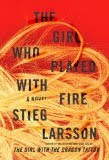
The Girl Who Played with Fire by Stieg Larsson (4.5 stars)


Great book, heaps better than the first in the series. Salander grows ever more intelligent and amazing the more we find out about her. Not only is she a hacker wunderkind, a master chess player, a boxer (come on, really?), she also happens to be a genius mathematician despite the lack of any mathematical training. Of course she can solve Fermat's last theorem just by reading a pop-culture mathematical history textbook. Sigh. Incidentally there is a great book about Fermat's last theorem if you are interested. And why did Larsson make her a boxer? So ridiculous, I was perfectly happy with her as a hacker with a taser.

Speaking of ridiculous, the ending was one of the most overdone, totally implausible, stupid things I have ever read. I don't want to give away any plot here. You'll know what I mean when you read it.

Larsson has an annoying habit of inserting massive amounts of unnecessary detail. Consider this boringly complicated description of a dinner at Blomkvist's sisters' family:
Annika had two children: Monica, thirteen, and Jennie, ten. Her husband Enrico, who was the head of the Scandinavian arm of an international biotech. firm, had custody of Antonio, his sixteen-year-old son from his first marriage. Also at dinner were Enrico's mother Antonia, his brother Pietro his sister-in-law....

Of the eleven people he introduces in this passage, none of them play even the most minor role in the story. We never hear from them again. Where were you editor?

Speaking of editing, I found the use of the word 'dyke' fairly offensive in some places, even when it wasn't supposed to be (ie. Faste didn't say it). In Australia (and most of the English-speaking world I believe) it is typically derogative. I suspect the same is not true in Swedish and it was just a bad translation choice.

Oh, and every single character in this book is going to have serious health problems from the amount of coffee they drink - it's like Phillip Marlowe, but with caffeine instead of alcohol.

One more thing. Berger is a complete bitch for even considering deserting Millenium at the time of crisis.

Now that I have all that off my chest, I need to say again this is a great book. I didn't pick the major revelation about Zala, and thought it was quite clever. I couldn't put it down and stayed up to 1:30am to finish it.

4.5 stars.

Update: I forgot something else that really annoyed me! What is with the product placement in this book? It's everywhere!
She went shopping at H&M and Kappahl department sores and bought herself a new wardrobe...

Her most extravagant purchases were from Twilfit...

...sat down at her PowerBook...

...a jumbo pack of Billy's Pan Pizza...

Ikea should have payed thousands of dollars for the advertisement below - I'm expecting a "Buy Lisbeth's Salander's Furniture" link on the Ikea website any day now. I suspect the Larsson estate didn't make any money off the gratuitous advertising since the contracts would have to be in place before publishing - so why is it still there? I think Anna is right about them being reluctant to edit, see her comment.
She drove to Ikea at Kungens Kurva...She bought two Karlanda sofas with sand-coloured upholstery, five Poang armchairs, ... a Svansbo coffee table and several Lack occasional tables. From the stoage department she ordered two Ivar combination storage units and ...

Checked the Ikea website, and most of those models don't even exist anymore.

Monday, October 5, 2009

The Remains of the Day by Kazuo Ishiguro (3.5 stars)


This book won the Booker in 89, and has been made into a movie starring Anthony Hopkins and Emma Thompson. It has a lot of critical acclaim and is beautifully written. I enjoyed reading it, although I always felt that the real story was just around the corner, and then it ended. Stevens' revelations about his life are quite depressing, as are his absurd allegiance to his employer such that he waits at table while his father dies upstairs. A deserving winner of the prize but I'm not going to pretend I loved it.

3.5 stars.